Whether you're a seasoned woods wanderer, a curious backyard botanist, or someone looking to responsibly forage nature's bounty, mastering Conifer Species Identification is an invaluable skill. These ancient evergreens, with their distinct needles, unique cones, and textured barks, tell fascinating stories—but knowing how to read them is crucial. From the towering redwoods to the humble junipers, conifers are a global presence, vital to ecosystems and human history alike.
But here's the vital truth: not all conifers are created equal. While many offer edible or medicinal gifts, others, like the deceptively charming Yew, harbor deadly toxins. That's why precise identification isn't just a hobby; it's a non-negotiable step for anyone interacting closely with these majestic trees.
At a Glance: Decoding Conifers
- Needles or Scales: Most conifers have either needle-like or scale-like leaves; this is your first big clue.
- Cone Clues: Cones are the reproductive structures—their shape, size, texture, and how they attach (upright vs. hanging) are key identifiers.
- Bark Narratives: The bark's color, texture (smooth, scaly, furrowed), and thickness can seal the deal.
- Branching Patterns: How branches emerge and the overall tree shape often point to specific families or species.
- Evergreen Except for a Few: Most conifers keep their foliage year-round, but watch out for deciduous exceptions like larches and dawn redwoods.
- Toxicity is Real: Always verify identification multiple ways. The Yew tree is notoriously poisonous, highlighting the importance of accurate ID.
The Evergreen World: Understanding Conifer Basics
Conifers are part of an ancient group of plants called gymnosperms, meaning "naked seed" – their seeds aren't enclosed within a fruit. Instead, they typically develop on the scales of cones. Found across temperate regions worldwide, these trees define landscapes, from vast boreal forests to coastal redwoods. With over 600 species spanning eight distinct families, the diversity can feel daunting, but breaking it down makes the puzzle manageable.
Your journey into conifer identification will primarily focus on three key features: the type of needles (or scale-like leaves), the structure and attachment of their cones, and the distinctive patterns of their bark. Let's explore the major players and their unique signatures.
Pinaceae Family: The Needles, Pines, Firs, and Spruces
This extensive family includes some of the most recognizable and frequently encountered conifers. Pines, firs, Douglas-firs, spruces, hemlocks, and true cedars all belong here, offering a rich array of identification challenges and rewards.
Pine Trees (Pinus spp.): The Bundled Beauties
Pines are often the first conifer that comes to mind for many, and their identification is relatively straightforward once you know the trick.
Key Identification Features:
- Needles: This is your primary clue. Pine needles grow in distinctive bundles (fascicles), typically with 1 to 7 needles per bundle, though 2-5 are most common. They are often longer than other conifer needles and grow in a spiral pattern around the branch.
- Bark: Varies significantly by species, from thick and scaly to thin and flaky.
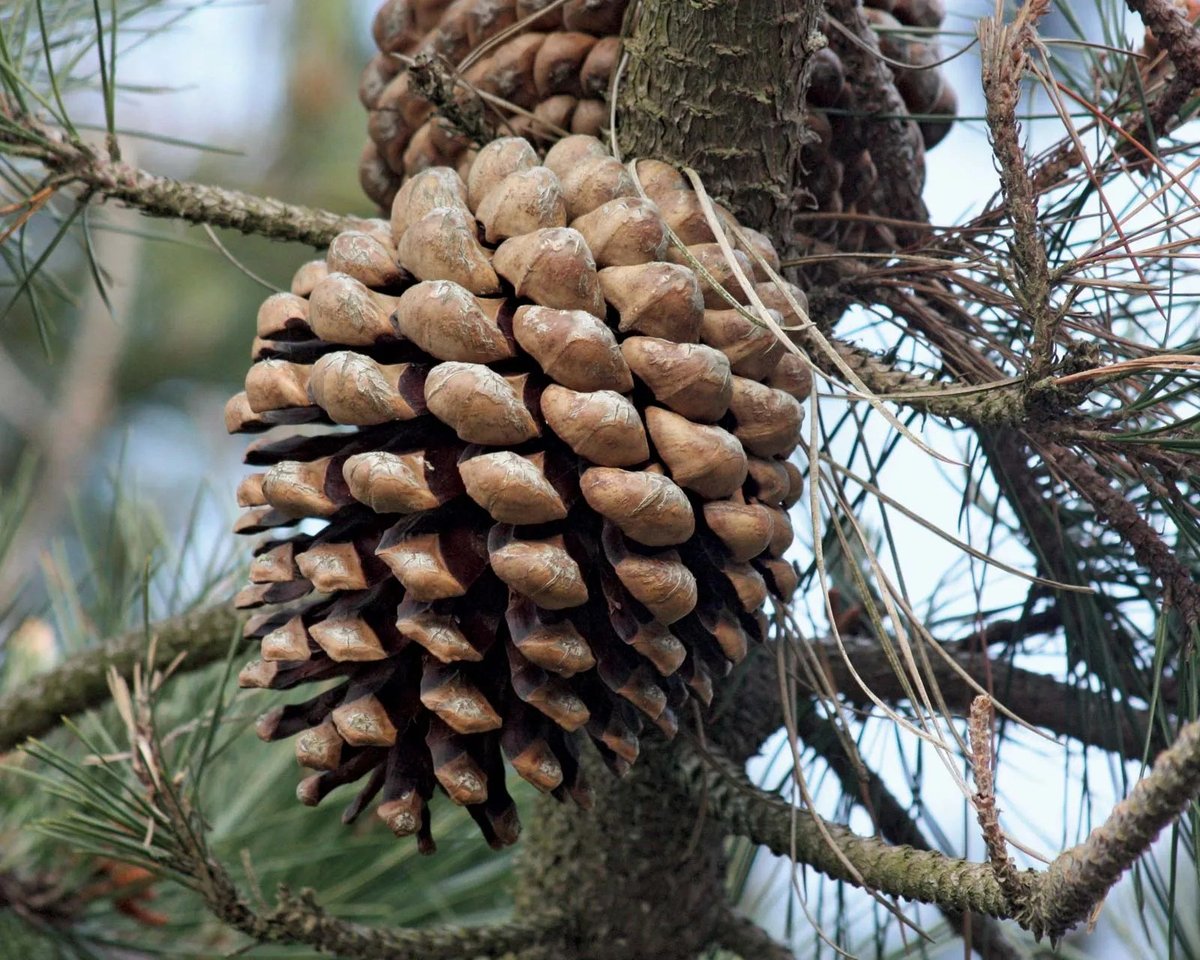
- Cones: Woody, brown, and generally hang downward. Their scales are spirally arranged.
- Seeds: Small and often winged, allowing for wind dispersal.
Edibility & Caution: Many pine species produce delicious edible pine nuts, with Piñon pine (Pinus edulis) being a prime example. You can also harvest their needles for teas or infusions, but always be 100% sure of your identification. A significant caution: Ponderosa pine (Pinus ponderosa) and potentially other "yellow pines" should be avoided internally by pregnant women. If you're keen to harvest, a guide to safely foraging pine needles is an excellent place to start.
Common US/Canada Species: - Eastern White Pine (Pinus strobus): Famous for its bundles of 5 soft, flexible needles. It has smooth, light gray bark when young, becoming furrowed with age, and long, slender cones that dangle down.
- Western White Pine (Pinus monticola): Similar to its eastern cousin, also with 5 needles per bundle, found in western North America.
- Loblolly Pine (Pinus taeda): Characterized by long, straight trunks and soft needles typically in bundles of 3.
- Norway Pine (Pinus resinosa): Also known as Red Pine, it has needles in bundles of 2 and a distinctive reddish bark. Known for its slender, straight trunk.
- Ponderosa Pine (Pinus ponderosa): Dense wood, stout, bright green needles in bundles of 3. Its cones are relatively small and cylindrical.
- Piñon Pine (Pinus edulis): Known for its edible nuts, typically found in the American Southwest.
Fir Trees (Abies spp.): The Upright Cones
Firs are often mistaken for spruces, but their needles and cones offer clear distinctions. They're a favorite for Christmas trees due to their pleasant scent and sturdy branches.
Key Identification Features:
- Needles: Fir needles are soft, flattened, and typically attach to the branch with a tiny, suction cup-like base. They usually have two distinctive white lines (stomatal bands) on their underside and often tend to point upwards or are arranged spirally around the twig. They feel flexible, not sharp.
- Cones: This is the most striking feature: fir cones stand up straight on the branch, like candles, rather than hanging down. As they mature, they often disintegrate on the branch, leaving a central core behind. Their color can vary from brown to blue, purple, or black.
- Bark: Usually smooth and often marked with resin blisters when young, becoming more furrowed with age.
Common US/Canada Species: - Balsam Fir (Abies balsamea): A quintessential Christmas tree, known for its fragrant needles and dark green, soft, flat needles.
- White Fir (Abies concolor): Has beautiful, often bluish-green needles, sometimes with a slight curve, and can grow quite large.
- Grand Fir (Abies grandis): Characterized by a conical crown and flat, shiny green needles with white stripes on the underside. Its lime-green cones stand erect.
- Fraser Fir (Abies fraseri): Another popular Christmas tree, noted for its soft, spiky-looking needles and medium-sized erect cones.
Douglas-fir (Pseudotsuga spp.): The False Fir with a Tail
The Douglas-fir is a bit of a trickster. Despite its name, it's not a "true fir" (which are Abies species) nor a true hemlock, although it's sometimes called a "false hemlock." It holds its own genus, Pseudotsuga, meaning "false hemlock."
Key Identification Features:
- Needles: Soft and flat, growing all the way around the branch. They are typically pointed but not sharp like a spruce.
- Buds: Look for distinctive brown, cone-shaped buds at the tips of the branches. This is a crucial identification feature that immediately distinguishes it from true firs and spruces.
- Cones: Unique and highly identifiable! Douglas-fir cones hang downward and have distinctive, three-pronged bracts that protrude from between the scales, resembling "mouse tails" sticking out.
- Distribution: Extremely common in western North America (Pseudotsuga menziesii), known for its rapid growth and valuable timber.
Uses: A very popular Christmas tree, and its young needles are used in foraging for their pleasant citrusy flavor. Its hard, durable wood is highly prized for construction and furniture.
Spruce Trees (Picea spp.): The Prickly Pointers
If you've ever grabbed a conifer branch and felt a sharp poke, you were likely holding a spruce. These are known for their stiff, sharp needles.
Key Identification Features:
- Needles: Spruce needles are four-sided (you can roll them between your fingers) and attach to the branch via a small, woody peg. When a needle falls off, the peg remains, leaving a rough texture on the bare twig. They are stiff, pointy, sharp to the touch, and grow all around the branch.
- Cones: Spruce cones hang downwards and have thin, smooth, somewhat flexible scales. They remain intact on the branch and fall whole.
- Bark: Typically scaly or furrowed.
Common US/Canada Species: - Blue Spruce (Picea pungens): Famous for its striking blue-green, spiky needles and conical shape.
- Norway Spruce (Picea abies): Often planted as an ornamental, it has upward-pointing branches with stiff needles and elongated, oval, brown pendulous cones.
- White Spruce (Picea glauca): A common northern species, 50-100 feet tall, with spiky needles and brown, cylindrical cones.
- Engelmann Spruce (Picea engelmannii): Features a long, slender, tapering form with bluish-green needles and hanging cones with thin scales.
Comparing firs and spruces can be tricky, but remember the needle test: soft and flat for firs, stiff and pointy for spruces. Want more details? Check out how to easily tell fir from spruce.
Hemlock Trees (Tsuga spp.): The Varied Lengths
Hemlocks are graceful trees, often found in cool, moist environments. They are distinct from the toxic Poison Hemlock; the similar scent of crushed needles is a coincidence.
Key Identification Features:
- Needles: Hemlock needles are short and flat, but their defining characteristic is that they grow in varying lengths along the same branch. Many species also have two white lines on their underside.
- Scent: When crushed, the needles often have a somewhat citrusy, sometimes faint "hemlock-like" scent (unrelated to the poisonous herb).
- Bark: Usually scaly and often deeply grooved, especially on older trees.
- Cones: Small, delicate, and typically hang downward.
- New Growth: The tips of the branches often have beautiful, light green new growth in the spring.
Common US/Canada Species: - Eastern Hemlock (Tsuga canadensis): A stately tree with short, flat needles and small, pendant cones.
- Western Hemlock (Tsuga heterophylla): A dominant tree in Pacific Northwest forests, recognized by its drooping leader (the very top shoot) and short, varied-length needles.
True Cedar Trees (Cedrus spp.): The Barrel-Shaped Cones
True cedars are native to the Himalayas and Mediterranean, primarily grown as ornamentals in North America. They are distinct from the "cedars" found in the Cupressaceae family.
Key Identification Features:
- Needles: Unlike the scale-like leaves of many "false cedars," true cedars have actual needles, which grow in dense clusters (rosettes) on short shoots. Needles are typically 1-2 inches long.
- Cones: Similar to true firs, their cones grow upwards on the branches and are often barrel-shaped. They disintegrate on the tree when mature.
- Scent: Highly aromatic, often used for its distinctive fragrance.
Species: Atlas cedar (Cedrus atlantica), Deodar cedar (Cedrus deodara), and Lebanon cedar (Cedrus libani) are common examples.
Cupressaceae Family: Scales, Berries, and Giants
This diverse family includes many species commonly referred to as cedars, junipers, and the colossal redwoods. A key difference from the Pinaceae family is that many of these species have scale-like leaves rather than needles, especially as they mature.
Juniper Trees (Juniperus spp.): The "Gin" Berry Cones
Junipers are widespread, hardy, and one of the few conifers that produce fleshy, berry-like cones.
Key Identification Features:
- Leaves: Can be either needle-like (especially on young growth or certain species) or scale-like (more common on mature branches), sometimes both on the same tree.
- Scent: Crush the foliage, and you'll often detect a distinctive, aromatic, "gin-like" scent (juniper berries are a key flavoring in gin).
- Cones: These are the star feature: juniper trees produce small, blue, fleshy seed cones commonly known as "juniper berries."
- Bark: Typically thin and peeling in strips.
Use & Caution: Juniper berries are generally edible and medicinal, known for their astringent, antiseptic, antiviral, and diuretic properties, making them beneficial for kidneys and the urinary tract. However, some species have mildly toxic berries, so positive identification is always essential before consumption.
Note: The tree often called "Eastern redcedar" (Juniperus virginiana) is, botanically speaking, a juniper, not a true cedar or an arborvitae.
Common US/Canada Species: Western juniper (Juniperus occidentalis), Rocky mountain juniper (Juniperus scopulorum), and Creeping juniper (Juniperus horizontalis) are some common examples.
Arborvitae (Thuja spp.): The Flat Fan-like Foliage
Often called Thuja or "cedar" (e.g., "Western red cedar"), these are not true cedars but belong to the cypress family. They're popular ornamentals and valuable timber trees.
Key Identification Features:
- Leaves: Distinctly scaly, flattened, and arranged in fan-shaped sprays or flattened branches. The individual scales overlap like shingles.
- Bark: Reddish-brown and often fibrous or stringy.
- Cones: Small and inconspicuous, sometimes resembling tiny, dry juniper berries.
- Scent: Highly aromatic when crushed, often with a sweet, resinous smell. Used in aromatherapy and as an insect repellent.
Caution: Arborvitae contains thujones, which are toxic in large doses. Internal use is generally not recommended without professional supervision.
Native North American Species: - Western Red Cedar (Thuja plicata): A giant of the Pacific Northwest, known for its strong, aromatic wood and flattened, lacy foliage.
- Northern White Cedar (Thuja occidentalis): A smaller, ornamental tree with soft, feathery, dense foliage and a conical shape.
Redwood Trees (Sequoioideae spp.): The Towering Giants
This subfamily includes some of the largest and tallest trees on Earth, iconic symbols of western North America.
Key Identification Features:
- Size: Unmistakably massive, reaching incredible heights.
- Bark: Thick, fibrous, and reddish-brown.
- Cones: Relatively small, egg-shaped, and very hard, especially considering the size of the tree.
- Leaves: Varies by species. Coast Redwoods (Sequoia sempervirens) have short, flat needles that are somewhat scale-like at the top of the tree. Giant Sequoias (Sequoiadendron giganteum) have small, scaly, awl-shaped leaves pressed close to the twig.
- Distribution: Naturally found in northern California and Oregon (with one species in China).
Other Notable Cupressaceae Species
- Atlantic White Cedar (Chamaecyparis thyoides): Found on the East Coast of the US, with scale-like, green to blue-green foliage and small, round cones.
- Lawson’s Cypress (Chamaecyparis lawsoniana): Known for its long, straight trunks, feathery foliage, and scale-like leaves. It produces small, globe-shaped seed cones.
- Alaska Cedar (Cupressus nootkatensis, sometimes Chamaecyparis nootkatensis): Distinctive for its drooping branches and flat sprays of scale-leaves.
Taxaceae Family: The Deadly Deceiver
This family contains one of the most important conifers to identify for safety reasons: the Yew. Its beauty belies its extreme toxicity.
Yew Trees (Taxus spp.): Beautiful but Deadly
Yews are common ornamentals and forest understory trees, but their entire plant, with the exception of the fleshy part of the berry, is highly poisonous.
Key Identification Features:
- Size: Generally smaller than most other conifers, often growing as shrubs or small trees.
- Needles: Flat, relatively short (less than an inch), and arranged spirally around the twig, though they often appear two-ranked (like a comb) on the branchlets. They typically have pale green or white bands on the underside. They are soft and flexible, similar to fir needles, but lack the suction cup base.
- Cones: Female yew trees produce unique, bright red, aril-like "berries." The fleshy red part is often described as edible, but the single, hard seed inside is deadly toxic. Even a small amount of chewed seeds can be fatal.
- Bark: Thin, reddish-brown, and often peels in strips.
Actionable Insight: Do NOT forage for edible or medicinal uses if the tree is in the Yew family due to its extreme toxicity. This is a non-negotiable rule for your safety. For those interested in plant safety, our guide to identifying toxic plants offers critical insights.
Conifer Identification: A Quick Reference Summary
When you're out in the field, here's a rapid-fire checklist to help you make sense of the evergreen world. Your most reliable clues will always come from the needles and cones.
Needle Examination: Your First Clue
- Pines (Pinus spp.): Needles grow in bundles (fascicles), typically 2-5 per bundle. They are often long and flexible.
- Spruce (Picea spp.): Needles are single, four-sided, stiff, and sharp. They attach to a small woody peg that remains when the needle is pulled off.
- Fir (Abies spp.): Needles are single, flat, soft, and flexible. They attach with a small suction-cup base and often have two white lines on the underside.
- Douglas-fir (Pseudotsuga spp.): Needles are single, soft, flat, and grow all around the branch. Look for distinctive cone-shaped buds.
- Hemlock (Tsuga spp.): Needles are single, short, flat, and of varying lengths on the same branch.
- True Cedar (Cedrus spp.): Needles grow in dense clusters on short shoots.
- Juniper (Juniperus spp.): Leaves can be needle-like or scale-like, often both on the same plant. Distinctive scent.
- Arborvitae (Thuja spp.): Leaves are scale-like, flattened, and form fan-shaped sprays.
- Redwood (Sequoia/Sequoiadendron spp.): Leaves can be short, flat needles or small, awl-shaped scales.
- Yew (Taxus spp.): Needles are single, flat, soft, and typically have pale bands on the underside, often appearing two-ranked. No woody peg or suction cup.
Cone Examination: The Definitive Feature
- Pines (Pinus spp.): Woody, typically elongated, and hang downward.
- Fir (Abies spp.): Stand erect on the branches like candles and disintegrate on the tree.
- Douglas-fir (Pseudotsuga spp.): Hang downward and have distinctive "mouse tails" (three-pronged bracts) protruding from the scales.
- Spruce (Picea spp.): Hang downward, scales are thin and smooth, and they fall whole.
- Hemlock (Tsuga spp.): Very small and delicate, hang downward.
- True Cedar (Cedrus spp.): Barrel-shaped, stand upright on branches, and disintegrate.
- Juniper (Juniperus spp.): Fleshy, blue, berry-like.
- Arborvitae (Thuja spp.): Small, dry, and often inconspicuous.
- Redwood (Sequoioideae spp.): Small, egg-shaped, and hard.
- Yew (Taxus spp.): Female trees produce bright red, fleshy, aril-like "berries" with a single, deadly toxic seed inside.
Bark & Overall Shape: Additional Clues
While needles and cones are primary, bark texture (smooth, furrowed, scaly, peeling) and the overall tree shape (conical, columnar, spreading) offer valuable supporting evidence for your identification.
Beyond Identification: The Gifts of Conifers (and the Warnings)
Once you've confidently identified a non-toxic conifer, a world of edible and medicinal uses opens up. Many conifers, especially within the Pinaceae family, offer similar benefits and can often be used interchangeably in recipes, but always exercise caution and research the specific species.
Think about infusing pine or spruce needles into a comforting winter tea. Explore recipes for conifer-infused teas to warm you from the inside out. Their resinous, citrusy notes lend themselves beautifully to culinary creations, from shortbread cookies to syrups and even craft beverages. Medicinally, many conifers are rich in vitamin C and have expectorant, antiseptic, and anti-inflammatory properties. They are often used in lotions, balms, and essential oil preparations for respiratory support or soothing sore muscles.
If you're delving deeper into the healing properties of these forest guardians, our comprehensive guide to medicinal conifer uses can provide more detailed insights.
The Journey Continues: Cultivating Your Identification Skills
Conifer species identification is a rewarding journey, a blend of scientific observation and intuitive connection to the natural world. Start with the basics: needles, then cones, then bark. Practice in your local parks or forests, cross-referencing your observations with reliable field guides. Take photos, sketch details, and note the scent, feel, and context of each tree you encounter.
Remember, the goal is not just to put a name to a tree but to understand its unique story and safely appreciate its place in the ecosystem. With practice, you’ll not only become adept at distinguishing a spruce from a fir but also gain a deeper respect for these ancient, enduring sentinels of our planet. As you continue your exploration of the arboreal world, we invite you to Explore the Firt hub for more comprehensive guides and fascinating insights into forests and their inhabitants.